Why Read Surah Kahf on Friday? The 4 Core Lessons & Protection from Dajjal
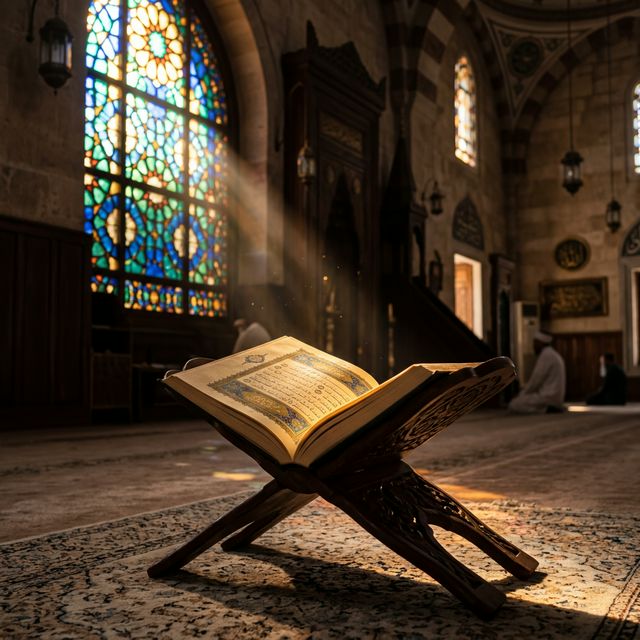
For millions of Muslims worldwide, the day of Jumu'ah (Friday) is incomplete without reading Surah Al-Kahf (Chapter 18 of the Quran). It is one of the most widely practiced Sunnahs, but many recite it weekly without truly understanding its profound wisdom and why specifically it acts as our ultimate defense mechanism against the trials of the end times.
The Reward: A Guiding Light
Before diving into the themes, it is vital to acknowledge the immense reward promised by the Prophet ﷺ for this specific practice:
"Whoever reads Surah Al-Kahf on Friday, he will be illuminated with light between the two Fridays."
— Sunan Al-Kubra
This "light" is both spiritual and literal. It guides the believer's decisions, protects them from sin, and provides clarity in a world filled with confusion and deception. But more crucially, Surah Kahf provides immunity against the greatest deception of all.
Protection Against the Dajjal
The Prophet ﷺ explicitly linked Surah Kahf to the appearance of the Dajjal (the Antichrist). The Dajjal will come at the end of times possessing immense deceptive capabilities. He will perform miracles, control weather, offer vast wealth, and claim divinity.
"Whoever commits to memory the first ten verses of Surat Al-Kahf will be protected from (the trial of) Ad-Dajjal."
— Sahih Muslim
Why Surah Kahf? Because the Dajjal will test mankind with four primary trials. Remarkably, the narrative structure of Surah Kahf consists of exactly four stories that directly address how to survive these four trials.
The Four Stories and Their Trials
-
The People of the Cave: The Trial of Faith (Deen)
The surah opens with the story of a group of young men living under a tyrannical king who forced idolatry upon his subjects. Recognizing the truth of monotheism, they fled to a cave to preserve their faith. Allah caused them to sleep for over 300 years, waking up to a society that had embraced their faith.
The Trial: The Dajjal will test people's faith, demanding to be worshipped.
The Solution: Righteous companionship, calling upon Allah for protection, and physically distancing oneself from centers of fitnah (trials). "And keep yourself patient with those who call upon their Lord in the morning and the evening..." (18:28) -
The Owner of Two Gardens: The Trial of Wealth
The second story features a wealthy man boasting about his two magnificent gardens to a poorer companion. The wealthy man attributed his success purely to his own efforts and doubted the Day of Judgment. Eventually, Allah destroyed his gardens, leaving him empty-handed and regretful.
The Trial: The Dajjal will control vast amounts of wealth and rain, testing people with prosperity.
The Solution: Remembering that all wealth is temporary and a test from Allah. Acknowledging "Masha'Allah, La quwwata illa billah" (As Allah willed, there is no power except in Allah) when seeing blessings. -
Musa and Al-Khidr: The Trial of Knowledge
Prophet Musa (AS) was asked who was the most knowledgeable of people, and he replied that he was. Allah directed him to meet a man named Al-Khidr, who was granted divine knowledge of the unseen unseen by Musa. Khidr performed actions that seemed terrible to Musa (damaging a boat, killing a boy), but the eventual explanation revealed Allah's perfect divine wisdom behind what appeared to be tragedies.
The Trial: The Dajjal will perform acts that seem completely inexplicable and confusing.
The Solution: Humility. Understanding that human knowledge is severely limited and submitting entirely to Allah's decree, even when circumstances make no logical sense to our limited perception. -
Dhul-Qarnayn: The Trial of Power
The final story chronicles a powerful and just king, Dhul-Qarnayn, who traveled the earth. Despite his immense authority and resources, he remained humble. When asked to build a wall to protect a community from Gog and Magog (Yajuj and Majuj), he attributed his ability to do so entirely to Allah's mercy.
The Trial: The Dajjal will possess absolute worldly power and dominion.
The Solution: Sincerity and justice. Using power and resources to establish good, protect the weak, and constantly recognizing that true authority belongs only to the Creator.
Read Surah Kahf Right Now
If it's Friday, take 20 minutes to read this beautiful chapter and secure your light until next week.
Go to Surah Kahf ReaderFAQ
In the Islamic calendar, a new day begins at sunset. Therefore, the period to read Surah Kahf starts from Maghrib (sunset) on Thursday evening and extends until Maghrib (sunset) on Friday.
Yes, you do not have to read the entire surah in one sitting. You can read a portion in the morning, a portion after Jumu'ah prayer, and finish it before Maghrib. The reward applies as long as it is finished within the Friday window.